Mero
I built Mero to run the day-to-day operations of a jewelry business.
- Role
- Solo build
- Status
- Live, paying customer
- Live
- merohq.com
- $25K+
- Processed through Stripe
- 25,000+
- SKUs stored
The problem
Jewelry manufacturing and wholesale runs on inventory, vendors, artisans, purchase orders, work orders, QC, shipping, invoicing, sales, and accounting. In most shops it runs on a dozen spreadsheets and a group chat.
Generic ERP doesn't model the parts that matter here: a work order that passes through an artisan, metal and stone costs that move, QC before a piece can ship.
What I built
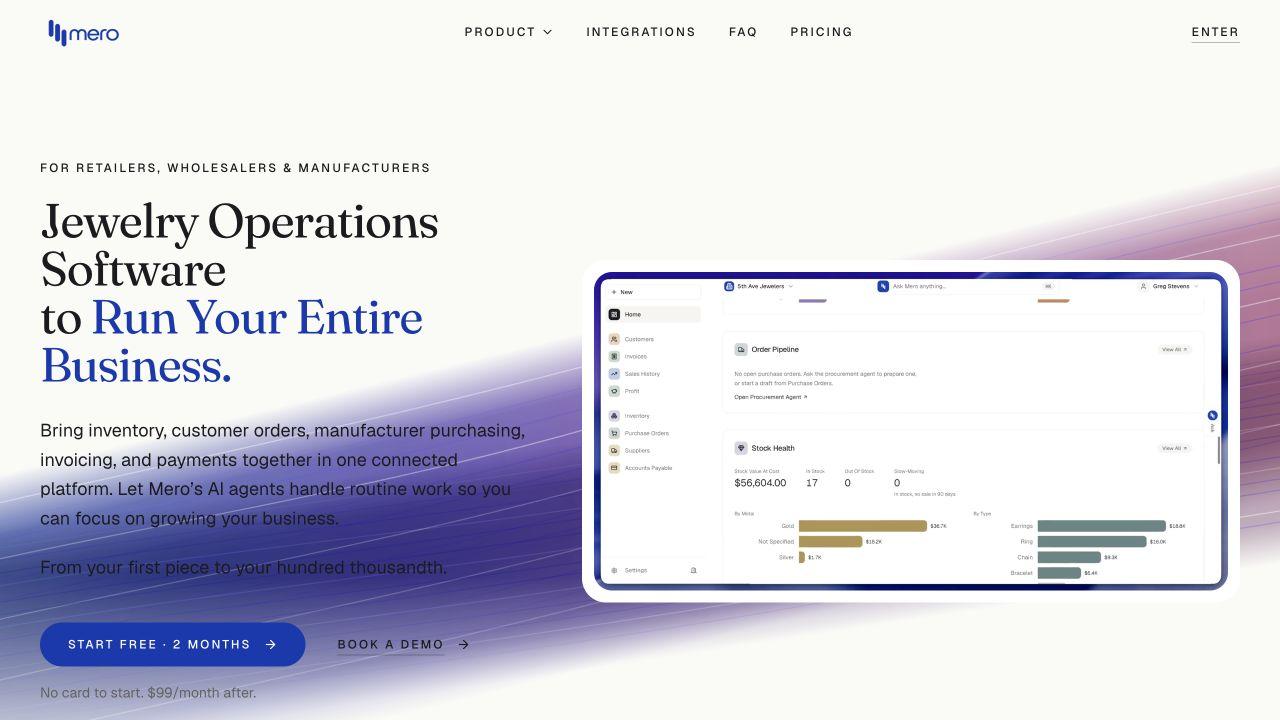
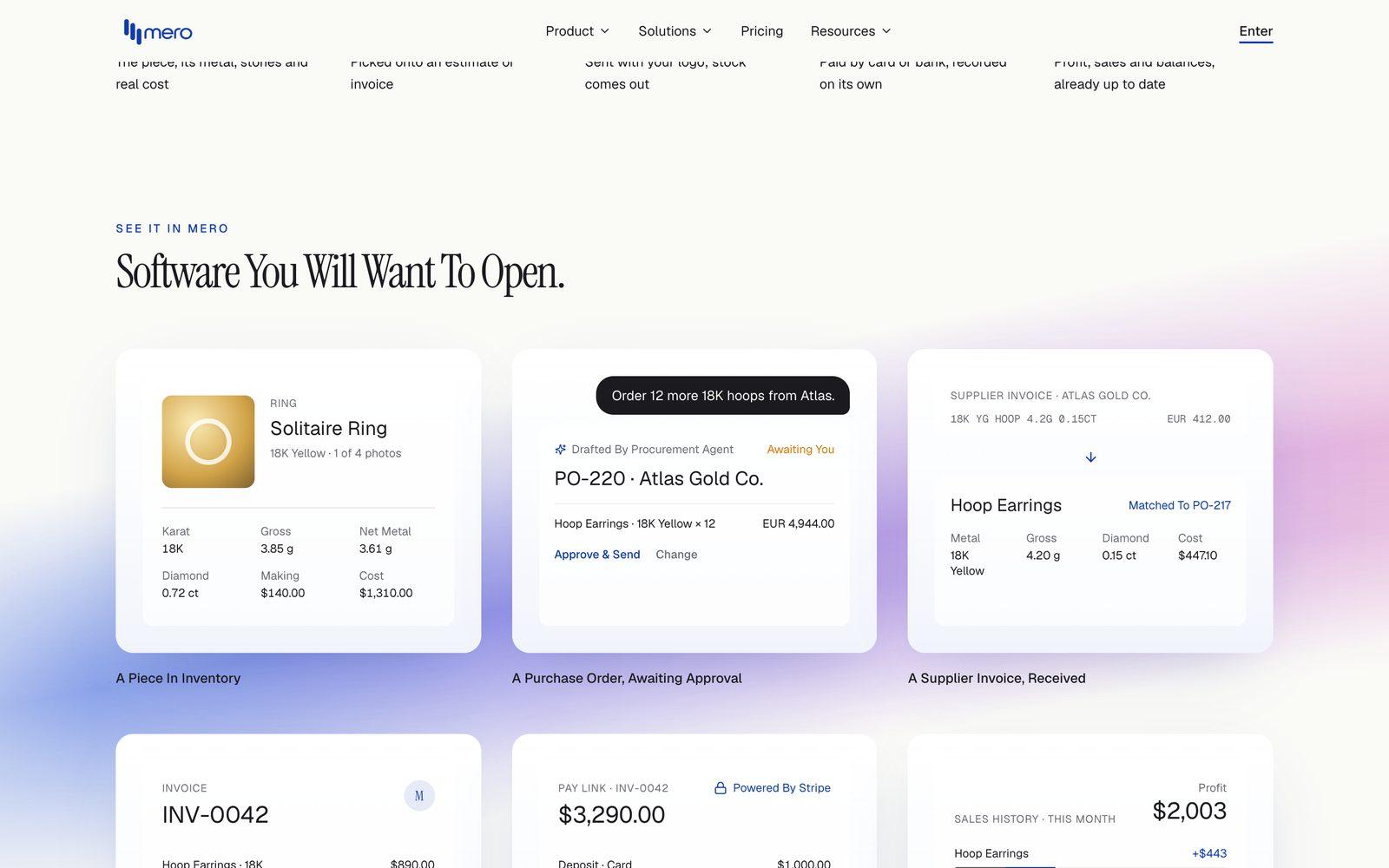
I brought inventory, purchasing, vendors, artisans, work orders, quality control, shipping, sales, invoicing, accounting, and reporting into one system.
Agents handle orders, receiving, inventory, and cost, and nothing takes effect until the owner approves it.
Selected details
- Grounding
Built against real jewelry and e-commerce operations (fine jewelry in 14k and 18k gold and 925 silver, with custom manufacturing workflows), and running for a customer who replaced their Square and Wave setup with it.
- Stack
NestJS agent API on Render using the OpenAI Responses API. Supabase Postgres with row-level security and permission-checked database functions, Deno Edge Functions, and React + Vite on Vercel.
Screens
Where it landed
A paying customer at $99/month, with $25K+ in transaction volume processed through Stripe and 25,000+ SKUs stored.
What I took from it
- I learned how much of the work sits in exceptions. Getting the standard workflow right was only the start.